By MWM Custom / Design journal
Before a finish catches the light or a component reveals its detail, a motorcycle is recognised through proportion. The relationship between its wheels, upper body, and open spaces creates an immediate impression. It can feel long and composed, compact and concentrated, or deliberately unfamiliar. That impression begins well before a viewer knows anything about its specification.
At MWM, silhouette is a starting point for design. The collection makes this principle visible through contrasting approaches. HD Limousine stretches the eye along a low horizontal line. Xtreme Max V2 separates its body into layers around an open structure. Neither needs to share the same shape to belong to the same enquiry: how can the arrangement of parts give a motorcycle a coherent identity?
Read the outline first.
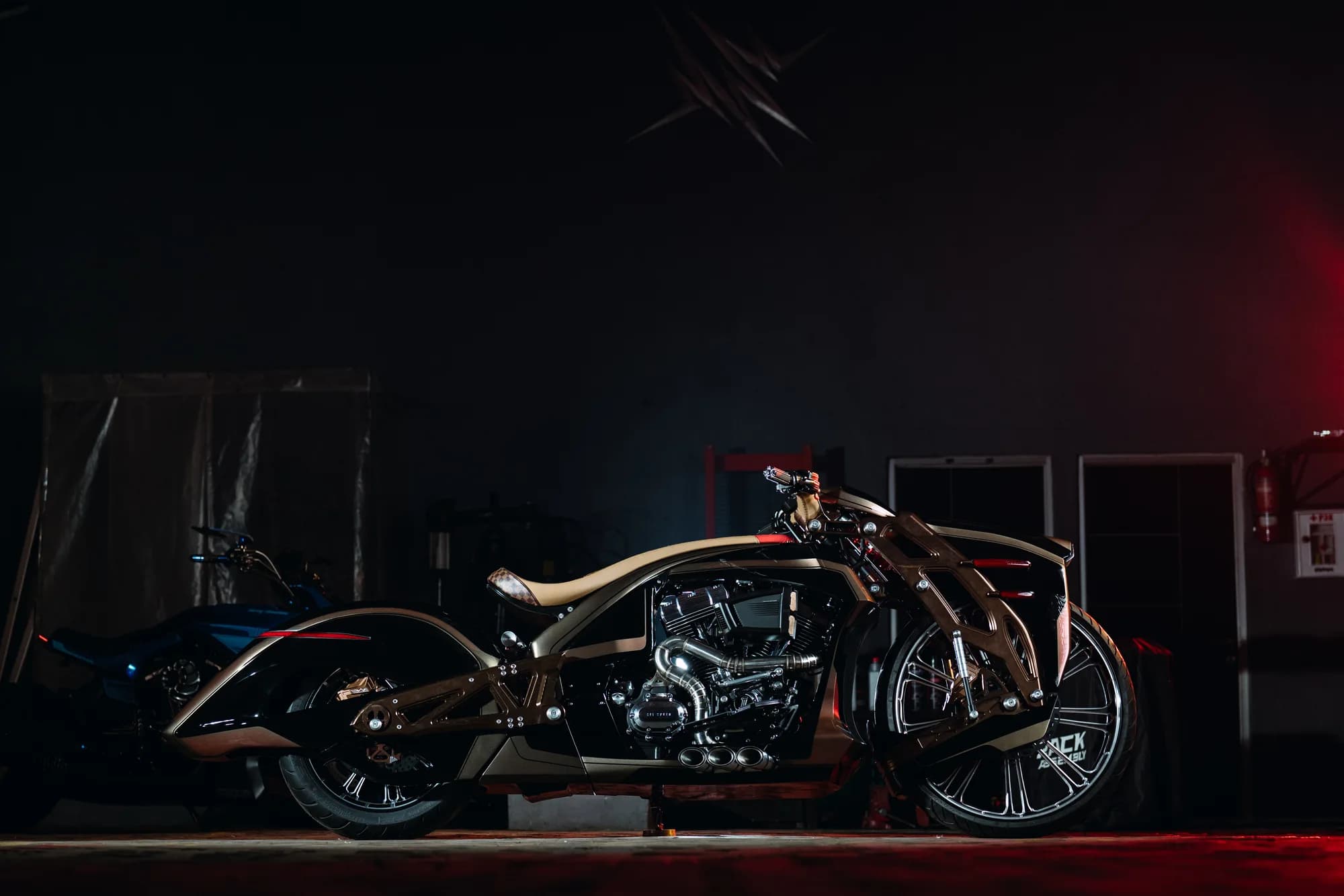
In the side photograph of HD Limousine, the front wheel creates a strong upright form against the length of the body. Dark surfaces settle close to the ground, and the warm edging carries the eye towards the rear. The relationship is easy to read from a distance, even where the mechanical details fall into shadow.
This is why proportion matters before decoration. A small detail can reward attention, but the larger arrangement decides where that attention begins. Looking at an image as a silhouette is a useful way to separate the underlying composition from the colour and reflections that sit on top of it.
Give space a role.
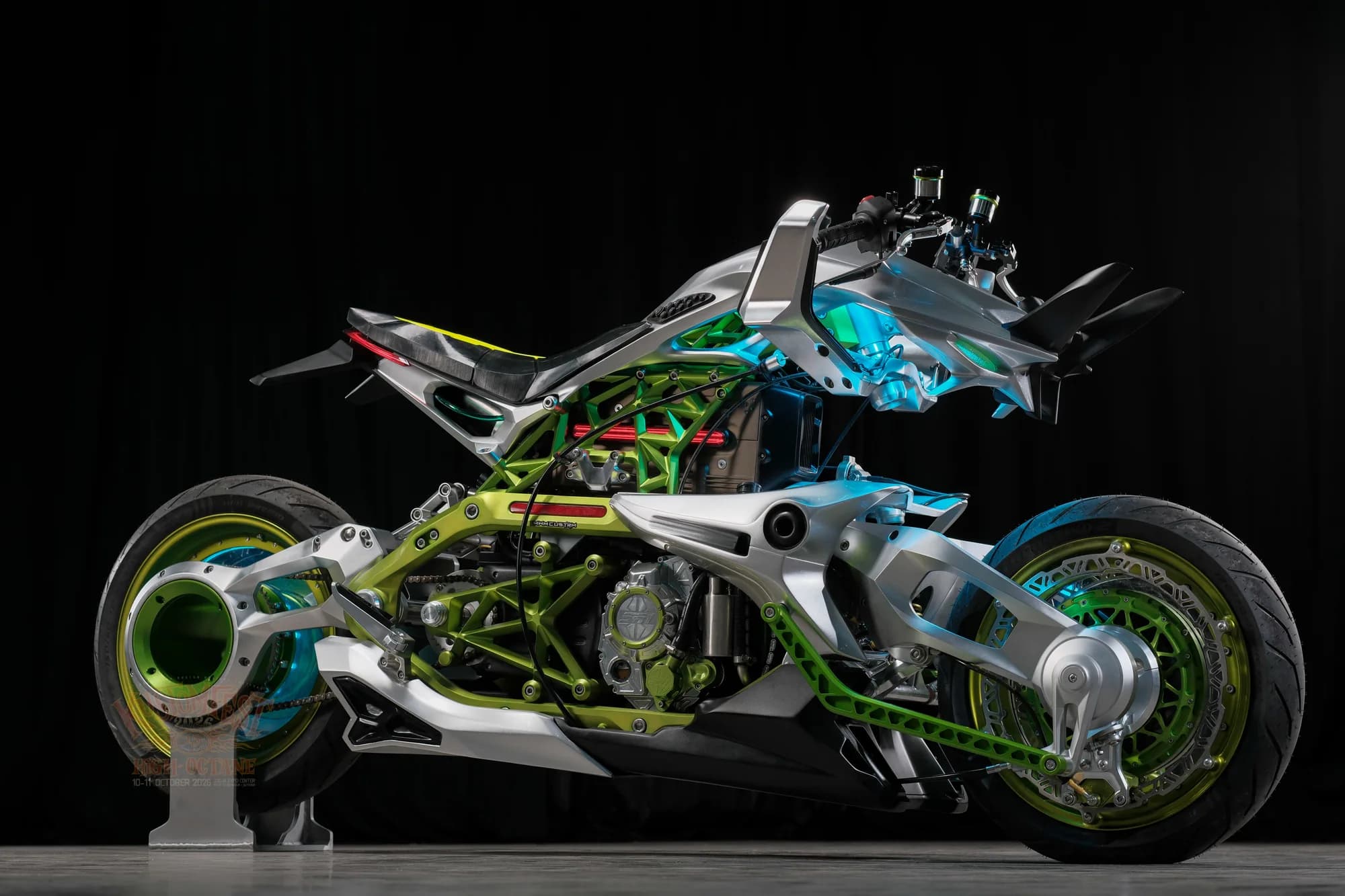
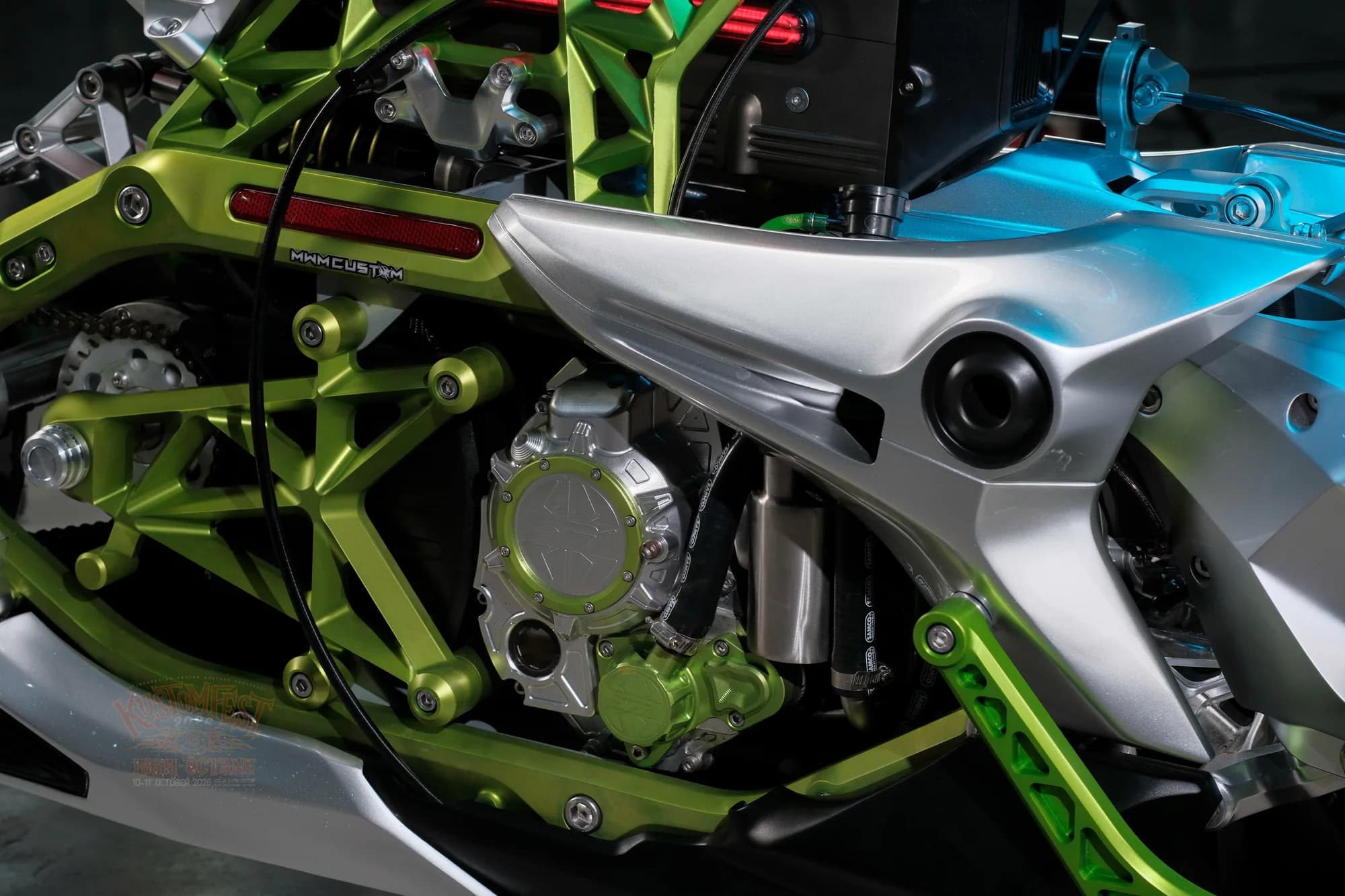
A motorcycle is shaped by the spaces between its components as well as the components themselves. In Xtreme Max V2, openings reveal the green structure beneath the silver-toned panels. The eye moves between the outer surfaces and the elements behind them, reading depth rather than a single enclosing body.
That visual openness does not establish a weight or performance claim. It describes how the machine is perceived. Negative space can reduce the apparent mass of a composition, separate competing details, and help the viewer understand which elements are intended to lead.
Change your point of view.
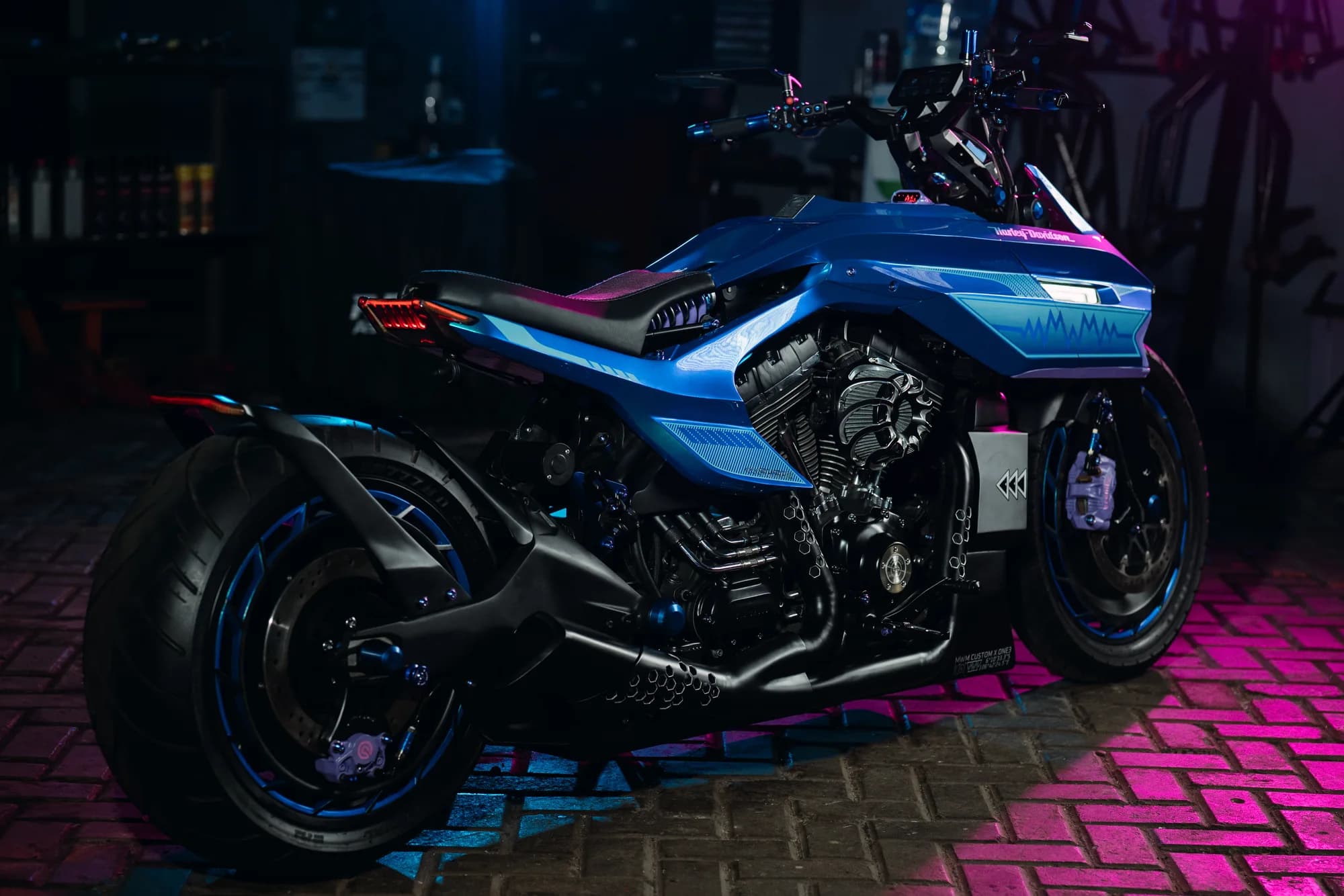
A side profile gives only one reading. Move towards the rear of Sharky and the broad tire becomes a foundation beneath a much slimmer tail. Move towards the front and the blue bodywork takes on a more pronounced width. The character stays consistent, but its emphasis changes.
Designing a coherent motorcycle involves holding these views together. The photograph that first attracts attention should lead naturally to another angle, then to a detail. For the viewer, that is part of the pleasure of looking closely: discovering a composition that continues beyond its most familiar image.